
Introduction
A well-decorated home does more than look attractive. The right furniture, colours, lighting, storage, and textures can make rooms easier to use and more comfortable to live in. rapidhomedirect .com can be approached as a practical source for homeowners looking for ideas that balance appearance with everyday function.
For homes in the UK and USA, good decorating decisions often depend on room size, natural light, architecture, climate, lifestyle, and budget. A large open-plan American living area may need different furniture proportions from a compact UK terrace or flat.
This guide brings together practical ways to approach home decor, from choosing a colour scheme and arranging furniture to using lighting, texture, storage, and current design ideas without making your home feel like a showroom.
Start With How the Room Will Be Used
Before buying decorative pieces, decide what the room needs to do.
A living room might need to accommodate conversation, television viewing, reading, children, guests, or several of these activities at once. A bedroom needs to support rest and storage, while a dining area needs enough clearance for people to sit and move comfortably.
A useful starting point is to identify:
- The room’s primary purpose
- The people who use it most
- Existing furniture worth keeping
- Storage requirements
- Natural and artificial lighting
- Areas that receive heavy daily use
- The amount of maintenance you are willing to handle
This prevents a common decorating mistake: buying attractive individual items that do not work together as a room.
Build a Colour Scheme Around the Room
Colour is one of the simplest ways to change the character of an interior, but it does not have to mean painting every wall a dramatic shade.
A practical scheme can combine:
- A dominant colour for walls or larger surfaces.
- A secondary colour for furniture, curtains, rugs, or larger accessories.
- Accent colours used sparingly in cushions, artwork, ceramics, or smaller decorative pieces.
Warm neutrals, earthy greens, brown tones, dusty blues, and other nature-influenced colours have featured strongly in 2026 interior design coverage. UK design reporting has also highlighted richer earthy palettes and more personalised interiors rather than highly coordinated rooms.
The important point is not to follow a trend blindly. Choose colours that work with the amount of daylight your room receives and the furniture you already own.
Think About Natural Light
A colour can look substantially different under morning daylight, afternoon sunlight, and artificial lighting.
Before committing to a wall colour:
- Test a sample on more than one wall.
- Look at it during different times of day.
- Check it beside flooring and furniture.
- Consider the colour temperature of your light bulbs.
- Avoid judging a paint colour from a tiny digital screen image alone.
This is particularly useful when choosing pale neutrals, greens, blues, and off-whites, where subtle undertones can become noticeable.
Choose Furniture for Scale, Not Just Style
Furniture should fit both the room and the people using it.
A large sofa can overwhelm a small living room, while undersized furniture can make a large space feel unfinished. Measure the room before shopping and consider walking routes around doors, windows, cabinets, and other furniture.
For a living room, consider the relationship between:
- Sofa and coffee-table height
- Seating and television position
- Rug size and seating arrangement
- Side tables and armchairs
- Main lighting and room dimensions
For smaller homes, furniture with more than one function can be particularly useful. Storage ottomans, extendable dining tables, nesting tables, and appropriately sized shelving can provide flexibility without filling every available area.
Use Lighting in Layers
Lighting is often treated as a finishing detail when it should be considered part of the room’s design.
A layered lighting scheme can combine:
- Ambient lighting: general illumination for the room.
- Task lighting: focused light for reading, cooking, working, or other activities.
- Accent lighting: light used to highlight artwork, architectural details, shelves, or decorative objects.
Using only a bright central ceiling fixture can leave a room feeling flat. Adding table lamps, floor lamps, wall lights, or carefully positioned accent lighting can create separate zones and make the space more adaptable.
Current 2026 design coverage also points toward portable and more flexible lighting, alongside softer, tactile interiors.
Add Texture Without Adding Clutter
Texture gives a room visual depth. It can come from materials rather than simply from adding more objects.
Try combining several different surfaces, such as:
- Wood
- Woven fabrics
- Linen
- Cotton
- Wool
- Ceramic
- Stone
- Metal
- Glass
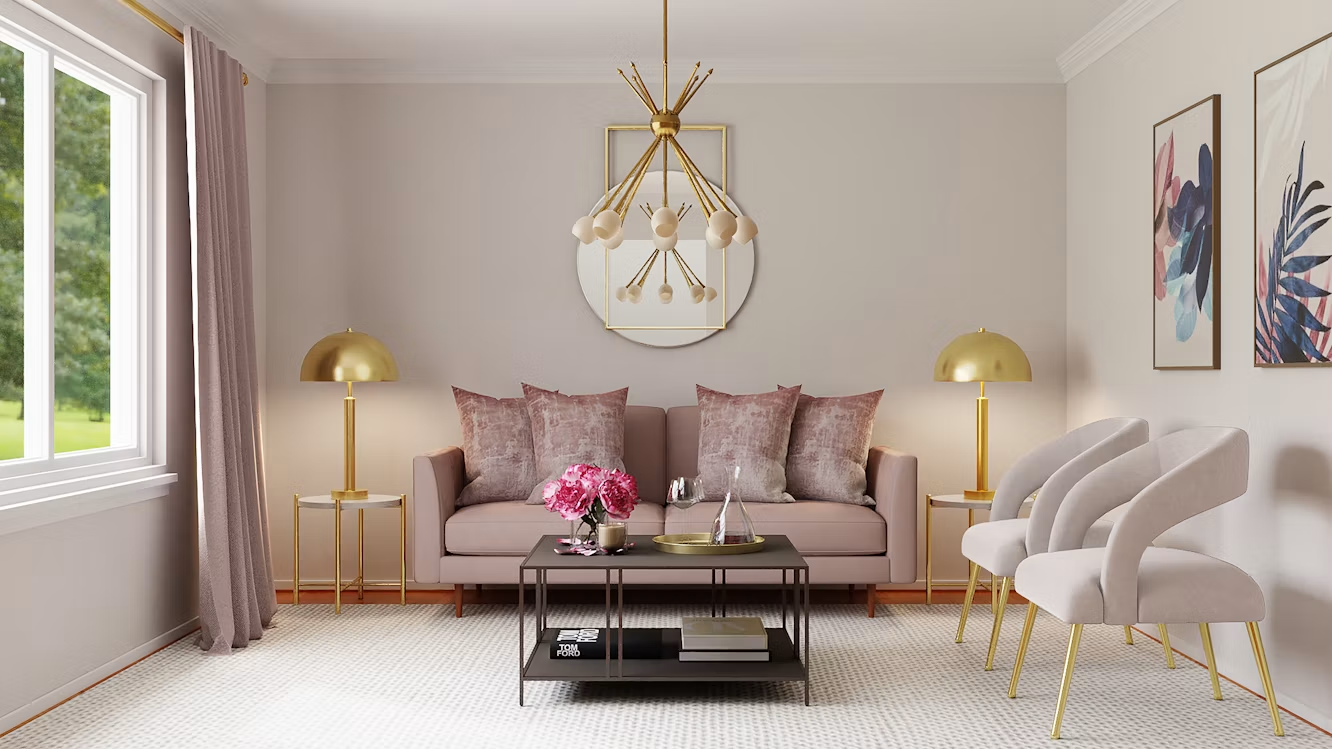
For example, a simple living room could combine a timber coffee table, textured rug, upholstered sofa, woven basket, ceramic lamp, and linen curtains. The result can feel layered without requiring a large collection of accessories.
There is also a practical side to texture. Some fashionable materials require considerably more maintenance than others. Bouclé, velvet, glass, open shelving, and polished stone can require more frequent cleaning or careful use in busy households.
Make Small Rooms Feel More Functional
Small rooms benefit from careful editing rather than simply adding small versions of everything.
Use Vertical Space
Tall shelving and wall-mounted storage can make use of areas that would otherwise remain empty. Keep frequently used objects within easy reach and reserve higher shelves for less frequently handled items.
Keep Floor Routes Clear
Furniture should not unnecessarily interrupt the main path through a room. A clear route between entrances and frequently used areas can make a compact room feel easier to navigate.
Give Each Area a Purpose
If one room serves several functions, create visual zones. A rug can define a seating area, a lamp can establish a reading corner, and a compact desk can mark a work area.
The goal is not to make every section look separate. The pieces should still share colours, materials, or proportions so the room feels connected.
Make Storage Part of the Decor
Storage works best when it is considered during the design stage rather than added after the room becomes cluttered.
Useful options include:
- Built-in cupboards
- Freestanding cabinets
- Open shelving for attractive everyday items
- Closed storage for visually busy possessions
- Under-bed storage
- Storage benches
- Baskets and boxes
- Wall-mounted systems
UK home-design research published by Houzz in 2026 identified growing interest in specialised storage, including appliance garages and walk-in pantries.
The same principle works outside the kitchen: storage should make frequently used possessions easier to organise while keeping surfaces available for the things that genuinely need to remain visible.
Decorate With a Mix of Old and New
A room does not have to follow a single design period.
Combining contemporary furniture with vintage artwork, inherited pieces, older ceramics, or traditional architectural details can make an interior feel more personal. This approach also gives you flexibility because not everything has to be replaced when your taste changes.
Current UK interior coverage has highlighted lived-in interiors, aged woods, antiques, reused pieces, and rooms that feel collected rather than perfectly coordinated.
The key is proportion. One or two distinctive older pieces can provide character without making the entire room feel themed.
Home Decor Ideas for UK and USA Homes
Although decorating principles are broadly transferable, homes in the UK and USA can present different practical considerations.
| Consideration | UK Homes | USA Homes |
|---|---|---|
| Common space challenge | Compact rooms and storage limitations can be important | Larger open-plan spaces can require careful zoning |
| Lighting | Natural light can vary considerably by room and orientation | Large windows and open layouts may create different lighting conditions |
| Furniture | Scale can be especially important in smaller rooms | Larger furniture can work in generous spaces but still needs adequate circulation |
| Storage | Built-in and space-efficient storage can be valuable | Larger kitchens, utility areas, basements, or garages may provide additional options |
| Styling | Traditional architecture can pair well with contemporary furnishings | Open-plan, transitional, modern, and regional styles offer varied approaches |
These are broad patterns rather than rules. The individual building and household should always determine the final decorating choices.
What Is Influencing Home Decor in 2026?
Current 2026 reporting suggests that interiors are moving toward more tactile, personal, and comfortable environments rather than relying exclusively on highly minimalist spaces.
Houzz’s 2026 U.S. trend report identified increasing interest in curved forms, tactile materials, warm colours, and spaces designed around connection and wellbeing.
In the UK, Houzz has reported interest in flexible kitchen layouts, dedicated reading spaces, statement ceilings, and specialised storage.
Other 2026 design coverage has highlighted decorative details, earthy colours, lived-in rooms, richer woods, and a mixture of older and newer pieces.
These trends can be used selectively. A homeowner does not need to redesign an entire property every time a new trend appears. Often, a new lamp, paint colour, textile, artwork, or occasional piece of furniture is enough to refresh a room.
Common Decorating Mistakes to Avoid
Buying Furniture Before Measuring
A beautiful sofa is still a poor purchase if it cannot comfortably fit through the entrance or leaves insufficient circulation space.
Using Too Many Matching Pieces
A complete furniture set can make a room feel predictable. Introducing different but compatible materials and shapes can create more visual interest.
Ignoring Lighting
A room may have attractive furniture and still feel uncomfortable if its lighting is too harsh, too dim, or poorly distributed.
Decorating Every Surface
Empty space is useful. Not every shelf, table, or wall needs an object on it.
Choosing Appearance Over Maintenance
A material that looks excellent in a photograph may not suit a household with pets, young children, frequent entertaining, or limited time for cleaning. Practicality should be part of the selection process. Recent design guidance has specifically highlighted maintenance challenges associated with materials such as velvet, bouclé, glass, open shelving, and polished marble.
How to Refresh a Room Without Starting Over
You can often change the feel of a room without replacing its major furniture.
Try this sequence:
- Remove objects that no longer serve a purpose.
- Rearrange existing furniture to improve circulation.
- Adjust the lighting.
- Add or replace textiles such as cushions, curtains, or a rug.
- Introduce one or two pieces of artwork.
- Add plants where natural light allows.
- Change small decorative objects rather than replacing large furniture.
- Reassess the room after living with the changes for a few days.
This approach can reveal what the room actually needs before you spend money on new pieces.
FAQ
What does rapidhomedirect .com focus on?
Rapidhomedirect.com presents home-related content covering areas such as interior design, home decor, furniture, storage, DIY, maintenance, and practical home improvement. Its published material describes a focus on helping readers make informed decisions about their homes.
How can I make my home look more expensive without replacing everything?
Focus on proportion, lighting, decluttering, quality-looking textiles, artwork, and a coordinated but not overly matched colour palette. Repositioning furniture and improving lighting can sometimes make a larger difference than buying additional accessories.
What home decor styles are relevant in 2026?
Current coverage includes warmer and earthier colour palettes, tactile materials, curved forms, lived-in interiors, richer woods, decorative details, flexible spaces, and more personalised rooms.
How do I decorate a small room?
Start by measuring the space, keeping circulation clear, choosing appropriately scaled furniture, using vertical storage, and creating defined functional areas. A limited colour palette can also help connect the room visually.
Should I follow home decor trends?
Use trends as inspiration rather than instructions. Choose ideas that suit your architecture, lifestyle, maintenance requirements, and budget. Timeless furniture and adaptable foundations generally give you more flexibility when tastes change.
Conclusion
Good home decor is less about filling a room with fashionable products and more about making deliberate choices. Start with how the space is used, then consider scale, colour, lighting, storage, texture, and maintenance.
For UK and USA homeowners, current design trends can provide useful inspiration, but the most successful room is usually the one that works comfortably for the people who live there. A few carefully chosen changes can often have more impact than a complete redesign.