
Introduction
Good interior design is about more than making a room look attractive. The most successful spaces balance appearance with comfort, movement, storage, lighting, and the way people actually use the room. For readers exploring interiorddesign rapidhomedirect.com, the goal should be to find practical ideas that can be adapted to different homes rather than copying a single decorating style.
A well-planned interior can make a small room feel more usable, give an open-plan space clearer purpose, or make an ordinary bedroom feel calmer and more inviting. The key is to make design decisions in the right order: understand the room, establish its function, plan the layout, and then select colours, furniture, materials, and accessories.
Start With How the Room Will Be Used
Before choosing furniture or paint, decide what the room needs to accomplish.
A living room might need to support conversation, television viewing, reading, entertaining, or several of these activities. A bedroom needs comfortable sleeping conditions and practical storage, while a home office needs suitable lighting, a workable desk position, and enough space for movement.
Write down the room’s main functions and identify anything that cannot be changed, such as:
- Windows and doors
- Radiators and heating equipment
- Built-in cupboards
- Electrical outlets
- Architectural features
- Structural walls
- Existing flooring that will remain
This simple assessment can prevent expensive purchases that do not work with the room.
Plan Furniture Around Movement
Furniture should support the way people move through a space rather than simply filling empty areas.
Start with the largest pieces. In a living room, this could mean positioning the sofa first and then arranging chairs, tables, storage, and media equipment around it. In a bedroom, establish the bed position before deciding where wardrobes or additional furniture should go.
Leave comfortable routes between frequently used areas. A visually attractive arrangement can still be frustrating if people have to squeeze between furniture or repeatedly walk around obstacles.
Use Scale Carefully
Furniture should relate to the size of the room.
A very large sofa can overwhelm a compact lounge, while several tiny pieces may make a large room feel disconnected. Measure the room and the furniture before buying whenever possible. Simple floor plans or removable tape on the floor can help you visualise dimensions before moving heavy furniture into place.
Choose a Cohesive Colour Scheme
Colour affects how a room feels, but there is no single colour combination that works for every home.
A practical approach is to begin with one dominant colour and introduce supporting shades through furniture, textiles, artwork, and accessories. Neutral walls can provide flexibility, while stronger colours can be introduced through a feature wall or smaller decorative elements.
Consider the room’s natural light as well. A colour that appears soft and warm in one room may look quite different in a space with limited daylight.
Before committing to a large quantity of paint or wallpaper, test samples in the actual room and observe them at different times of day.
Make Lighting Part of the Design
Lighting is one of the easiest aspects of interior design to overlook.
Instead of depending on a single ceiling fixture, consider several layers:
- Ambient lighting: Provides general illumination.
- Task lighting: Helps with activities such as reading, cooking, or working.
- Accent lighting: Draws attention to artwork, architectural details, or decorative features.
Table lamps, floor lamps, wall lights, pendant fixtures, and under-cabinet lighting can all contribute to a more flexible lighting scheme.
Natural light should also influence furniture placement and window treatments. Avoid blocking useful daylight unnecessarily with oversized furniture or heavy coverings.
Add Texture to Prevent Flat Interiors
A room can have a carefully selected colour palette and still feel visually flat. Texture helps introduce depth without requiring many additional colours.
Try combining materials such as:
- Wood
- Wool
- Linen
- Cotton
- Glass
- Metal
- Ceramic
- Natural stone
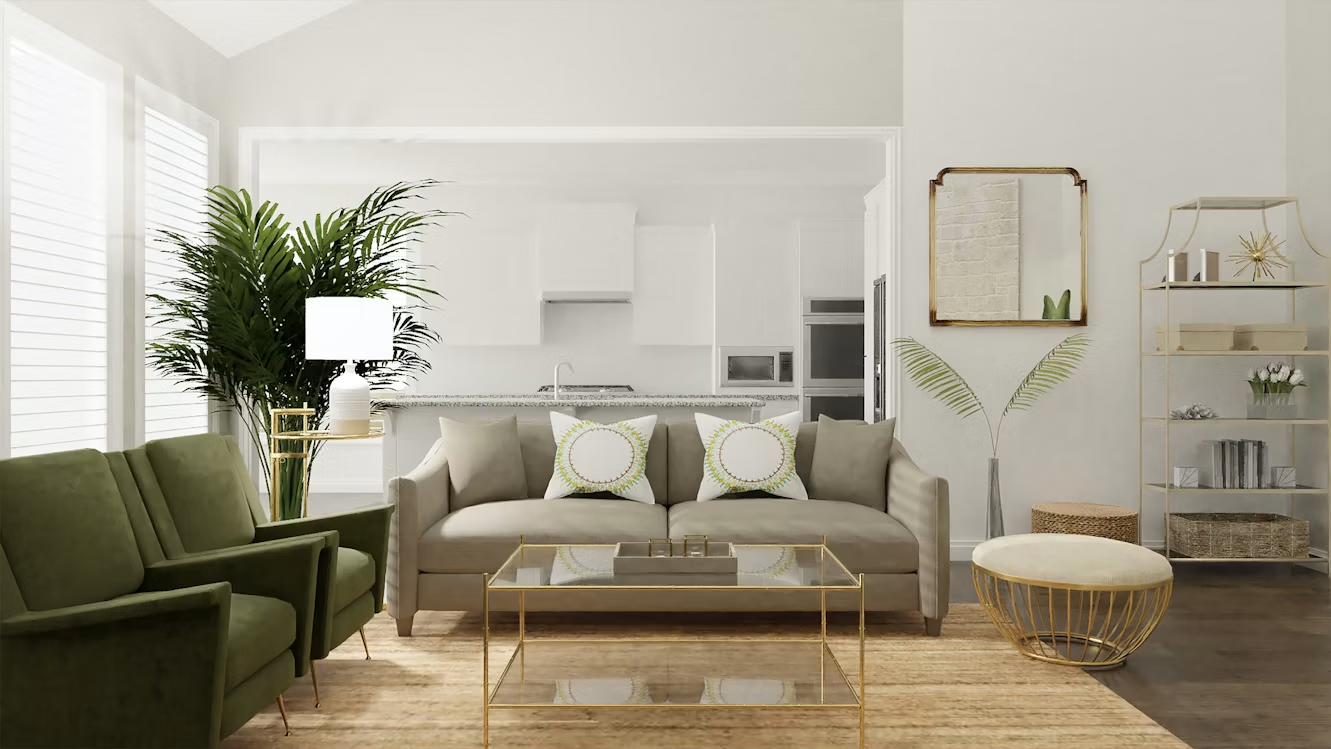
For example, a simple living room can gain visual interest through a textured rug, woven cushions, timber furniture, and soft curtains while maintaining a restrained colour palette.
Texture is particularly useful in neutral interiors because it creates contrast without relying on bold patterns.
Create Storage Without Sacrificing Style
Storage should be considered during the planning stage rather than added as an afterthought.
Look for opportunities to use vertical space, furniture with built-in storage, shelving, baskets, cabinets, and other solutions that keep frequently used items accessible without allowing clutter to dominate the room.
In smaller homes, multifunctional furniture can be especially useful. A storage ottoman, bedside cabinet with drawers, or bench with concealed storage can provide practical benefits without requiring another large piece of furniture.
The aim is not to hide everything. Items that are regularly used should remain easy to reach; storage simply gives them a defined place.
Design Small Rooms With Visual Space in Mind
A small room does not necessarily need to be filled with small furniture. In some cases, a few appropriately scaled pieces create a clearer and more comfortable arrangement than many compact items.
Useful approaches include:
- Keep major walkways clear.
- Use furniture with visible floor space beneath it where appropriate.
- Take advantage of wall-mounted storage.
- Use mirrors thoughtfully where they improve the perception of space.
- Avoid excessive patterns competing for attention.
- Choose lighting that reaches darker corners.
The objective is not to make a small room appear artificially large. It is to make the available space feel organised and usable.
Bring Different Rooms Together
A home usually feels more coherent when its rooms share some visual relationship.
That does not mean every room needs identical furniture or colours. Instead, repeat selected elements such as a material, accent colour, metal finish, flooring tone, or design style.
For example, warm timber might appear in the living room, dining area, and bedroom furniture. This creates continuity while still allowing each room to have its own character.
Avoid Designing Entirely Around Trends
Interior trends can provide inspiration, but a home should not depend entirely on short-lived styles.
When choosing expensive or difficult-to-replace elements, prioritise qualities that are likely to remain useful: appropriate scale, durable materials, comfortable furniture, practical storage, and a layout that suits everyday life.
Trendy accessories can be changed relatively easily. Major furniture, flooring, kitchens, and built-in features require considerably more effort and expense, so they deserve more careful consideration.
Common Interior Design Mistakes
Even attractive individual products can produce a disappointing room when they are combined without an overall plan.
Common problems include:
- Buying furniture before measuring the room
- Blocking windows or important walkways
- Using only one type of lighting
- Choosing colours solely from online photographs
- Adding too many decorative objects
- Ignoring storage requirements
- Selecting furniture that looks good but is uncomfortable
- Making every item match too closely
- Following trends without considering everyday use
The solution is usually not to buy more. A better result often comes from editing the room and giving each important element a clear purpose.
A Practical Order for Decorating a Room
If you are starting from an empty room, this sequence can make the process easier:
1. Measure the Space
Record the room’s length, width, ceiling height, doors, windows, and fixed features.
2. Establish the Layout
Decide where major furniture will sit and check that movement remains comfortable.
3. Select the Main Furniture
Choose pieces according to size, function, comfort, and the overall style you want.
4. Plan Colours and Materials
Choose wall colours, flooring, upholstery, timber, metals, and other major finishes.
5. Add Lighting
Combine general, task, and accent lighting according to the activities performed in the room.
6. Finish With Accessories
Introduce artwork, cushions, rugs, plants, mirrors, books, and other personal details after the main elements are established.
This order reduces the chance of buying decorative items that later conflict with the furniture or layout.
Interior Design for UK and US Homes
Interior design principles are broadly transferable between the UK and USA, but individual homes can have different architectural characteristics, room proportions, heating systems, construction methods, and availability of materials.
A Victorian terrace, American suburban house, modern apartment, and open-plan condominium may require very different solutions even when they contain the same type of room.
Rather than applying a design formula based solely on location, consider the actual property: its architecture, natural light, climate, available space, and how the occupants use it.
How to Make a Home Feel Personal
A well-designed room should reflect the people who live there.
Personal character can come from artwork, photographs, books, collected objects, textiles, plants, or furniture with sentimental value. These elements often make a room feel more lived-in than a space assembled entirely from matching showroom pieces.
A useful test is to ask whether each decorative item contributes something meaningful. If everything has been added simply to fill an empty surface, the room may benefit from editing rather than additional decoration.
Conclusion
Effective interior design starts with the way a home needs to function. Once the layout, movement, lighting, storage, and major furniture are considered, colours, textures, accessories, and decorative details become much easier to choose.
For anyone researching interior design ideas through Rapidhomedirect, the most useful approach is to adapt inspiration to the actual room rather than reproduce a photograph exactly. Measure first, prioritise comfort and function, and use decorative elements to give the finished space its own personality.